Why Fusion Ops
From fixing tools to designing systems.
Across teams, industries and tools, the same operational problems kept showing up in different forms. They looked like tooling gaps. They were almost always system-design gaps.
We don’t start with a tool. We start with how the business actually works.
Who chooses Fusion Ops
We’re chosen when growth exposes the system underneath it.
Fusion Ops is for B2B leaders who have moved beyond a simple, founder-led operation and now need the revenue engine to work across multiple people, teams, customer stages and systems.
They don’t need another disconnected tool, agency hand-off or generic transformation programme. They need a clear view of the operation, a sound design for improving it, and a partner who can connect the strategic and practical work.
Geography isn’t the constraint. Fusion Ops works with B2B companies across the UK, Australia, the US, Canada and India — anywhere the operation runs on HubSpot.
Leaders choose Fusion Ops when
- Revenue growth is becoming less predictable than effort suggests
- Sales, delivery and customer success are operating in silos
- CRM, reporting or automation investment hasn't created clarity
- The business is preparing to scale, add services, improve retention or professionalise operations
- They need a RevOps partner who understands that customer delivery is part of the revenue system
- They value diagnosis, design and long-term operational integrity over a quick fix
Why they choose us
Because we connect the full revenue operation: demand generation, sales, onboarding, delivery, customer success, data, systems and leadership decisions.
We don’t treat RevOps as a software function. We treat it as the operating system that lets a business acquire, serve, retain and grow customers reliably.
Our approach
Business problem first. Technology second.
The hardest part of transformation was never choosing the technology. It’s understanding how technology should change the way a business operates. So we don’t start with a tool — we start with the business problem.
The business is one operating system
People, processes, systems and data aren't separate projects. Fix one without understanding the others and you usually create a problem somewhere else. We look across the whole operation, not one isolated function.
Diagnosis before execution
Most problems that look like tooling gaps are system-design gaps. We find where work really flows, and where the system distorts behaviour, before anything gets built.
Technology earns its place
Automation and AI are execution layers, not decision-makers. Where they remove real work, we use them. Where they'd just add speed in the wrong direction, we say so.
Design for how it holds, not how it demos
The goal isn't to move fast or add features. It's to build an operation that still makes sense — and still performs — as the business becomes more complex.
We’d rather give you the right guidance than the most profitable one. That’s how professional trust — and long-term relationships — actually get built.
The methodology
The FUSION Method.
Businesses rarely have one isolated problem. People, process, technology, data, sales, service and delivery are interconnected.
So we treat the business as one operating system and bring it together in six stages. FUSION isn’t six words chosen to spell something — it’s the order the work has to happen in.
Frame
Define the real problem
Most businesses arrive with a symptom — a CRM to replace, leads that don't convert, a team losing hours. We establish the business objective, where the bottleneck actually sits, and what success would look like.
Frame the problem before solving the problem.
Understand
Map how the business actually works
We follow the work across marketing, sales, onboarding, delivery and retention — and underneath it the people, processes, technology and data — to find how work really gets done, rather than how it is assumed to.
Understand the system before changing the system.
Structure
Design the operating model
Processes, ownership, lifecycle stages, data structures, KPIs and system architecture, designed as one blueprint — so good execution becomes repeatable instead of heroic.
Structure the business so good execution becomes repeatable.
Integrate
Make everything work together
Excellent tools still operate badly when information gets trapped between them. We connect the systems, data and workflows the business already runs on. The goal isn't more technology — it's making what you have work as one system.
Integrate the pieces so the business operates as one.
Optimise
Improve performance continuously
Implementation isn't the finish line. We measure what actually happens — conversion, sales velocity, pipeline health, cost-to-serve — and improve on evidence. The goal isn't to automate a process; it's to make it perform better.
Optimise the system using data, not assumptions.
Nurture
Keep the system evolving
Markets, customers, teams and technology change, and a system that works today can be inefficient in six months. We monitor performance, adapt the automation and extend the infrastructure as the business grows.
Nurture the system so it evolves with the business.
Optimise one part of the business and you uncover the next constraint — so it loops back to Frame.
The method in motion: How We WorkOur principles
What we hold to — even when it costs us.
Principles only mean something when they’re inconvenient. These shape which work we take on, how we run it, and when we tell a client the honest answer isn’t a project.
Business first
We begin with business outcomes, not technology. The first conversation is about how your business works — not what we'd like to sell you.
Connected thinking
We look across departments, processes, systems and data, rather than optimising one isolated function and calling it transformation.
Practical technology
We use automation and AI where they solve a real problem and create measurable value. Where they don't earn their place, we say so.
Built to hold
We design operations that evolve as the business grows, so today's fix doesn't become next year's constraint.
What we don’t do — by design
- Ad-hoc support or ticket-based work
- Rushed implementations without diagnosis
- Tool-driven optimisation without context
- “Quick fixes” designed only to relieve pressure
About Fusion Ops
From repeated patterns to deliberate design.
Working across different teams, industries and tools, we kept noticing the same operational problems appear in different forms.
Forecasts that looked right on paper but felt unreliable in practice.
Systems that were fully implemented, yet quietly worked around.
Dashboards that existed, but didn't actually guide decisions.
Processes that worked for a while, then broke as complexity grew.
At first, these looked like tooling gaps or execution problems, and they were usually treated that way.
But the more operations we worked inside, the clearer the pattern became. These weren’t tool problems. They were system-design problems.
The agency model
Focus on execution speed and billable hours. The result is a patchwork that accumulates operational debt.
Operations architect
Focus on structural predictability. The result is a high-integrity operation that reflects how the business really works.
That shift — from execution to diagnosis, from tools to systems — is what defines Fusion Ops. It’s also why we take a deliberate, non-urgent approach. Operations compound over time; thoughtful design matters more than fast fixes.
The Founder
What actually makes a lead good?
My journey into Revenue Operations started with a simple responsibility: give my team the best possible chance to succeed.
At the time, I was a BDR Team Lead. Marketing was generating the leads my team depended on, so I started looking upstream. I wanted to understand where those leads came from, how they were qualified, what made them valuable, and what Marketing needed from Sales to see the return on its efforts.
That led to a simple question:
What actually makes a lead good?
The more I looked, the more I realized the answer wasn’t owned by any one team.
It lived between the people involved, the processes connecting them, the data being captured and carried forward, the technology enabling the work, and ultimately the experience the customer had along the way.
A lead could be well-targeted but poorly followed up.
Well-qualified but badly handed off.
Successfully closed but poorly onboarded.
Converted but never fully adopted.
At every stage, potential could either be carried forward or lost.
So I followed the friction.
I worked across the transitions from Marketing to BDR, BDR to AE, Sales to Customer Success, and eventually into onboarding, adoption, and retention.
With each transition, I began to see revenue less as a sequence of departmental activities and more as a connected system.
That became the foundation of my journey into Revenue Operations.
As a RevOps practitioner, I began turning that understanding into practical systems—working with CRM architecture, analytics, workflows, automation, segmentation, data logic, and cross-functional processes to make the revenue lifecycle more connected and predictable.
Sometimes the problem was visible: a broken handoff, an unclear SLA, inconsistent qualification, or missing reporting.
Sometimes it was much smaller—a business rule the CRM couldn’t express, a piece of information that wasn’t being carried forward, or a process nobody had thought to formalize.
But the approach remained the same:
Understand the business problem.
Understand the people operating it.
Understand the process behind it.
Understand the data moving through it.
Then design the system that connects them.
And even today, I keep coming back to the same bigger question:
What actually makes a lead good?
I no longer see the answer in the lead itself.
A lead’s potential is shaped by everything that happens after it enters the system—from the first interaction to qualification, conversion, onboarding, adoption, and retention.
The question, then, is not simply whether a business can generate good leads.
It is whether the system can realize their full potential.
That way of thinking eventually led me beyond RevOps.
It led to FusionOps.
I founded FusionOps to bring this perspective to the broader operating system behind growth—where people, processes, data, technology, automation, and AI need to work together with intent.
Because the objective isn’t to add more tools. It is to build a system that makes the whole business work better.
Revenue Operations · CRM Architecture · Automation · Data & Analytics
Certified across the platform
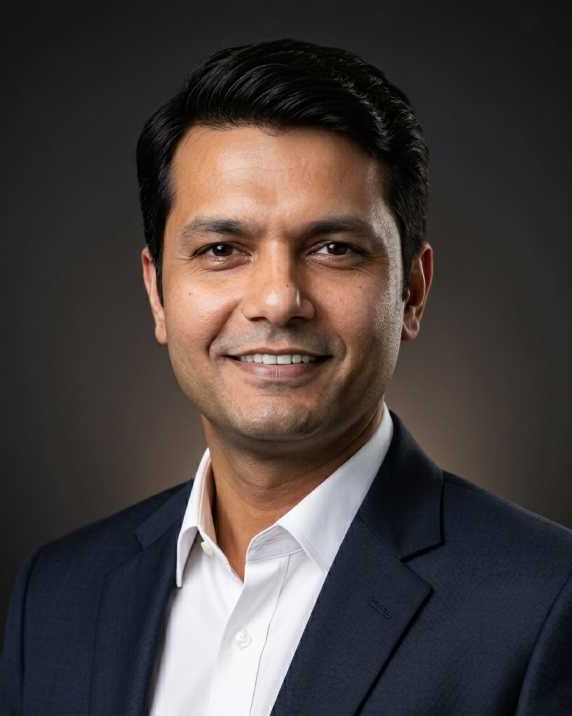
Dhaval Pandya
Founder, Fusion Ops
Let’s talk about your operation.
No pressure and no urgency — just a careful look at how your business runs and where it could run better.